
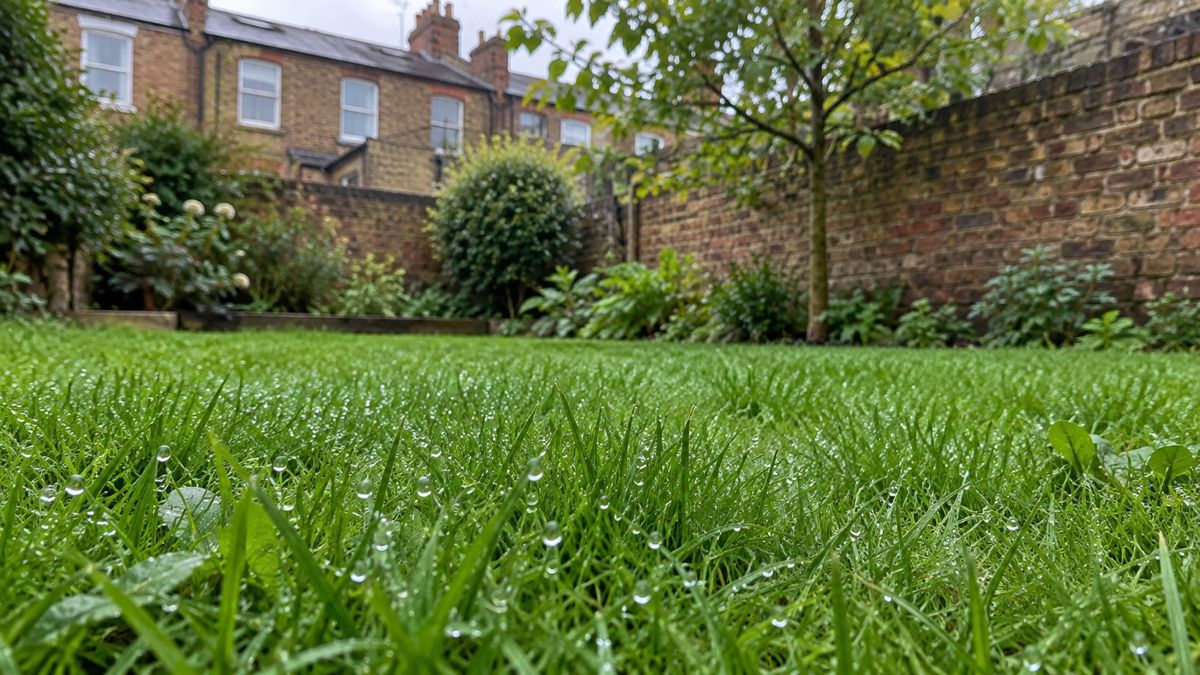
The grass that suits most London lawns is a blend of hard-wearing perennial ryegrass and fine fescues, laid as turf on soil that has been loosened and levelled first. Pick the mix to match how you use the garden and how much sun it gets. The soil under it matters just as much as the grass type.
This guide explains the main grass types, why London clay changes the advice, and how to choose between turf and seed for a small garden. It is general guidance, not a quote from any business.
Which grass types grow well in London?
Lawn grasses in the UK fall into a few groups. Most turf and seed packs are blends of two or three of them.
- Perennial ryegrass. Tough, quick to establish and good under foot traffic. It suits family gardens, children and dogs, though it does not like deep shade.
- Fine fescues. Creeping red fescue and chewings fescue make a fine, soft lawn. They cope with drier ground and some shade better than ryegrass.
- Bents. Very fine and dense, used in ornamental lawns. They look neat when cut short, but they need regular care and do not like heavy wear.
- Smooth-stalked meadow grass. Spreads by runners and helps a lawn repair itself, so it often appears in hard-wearing mixes.
Few turf products are a single species. When you compare options, look at the description rather than the name, and ask what the blend contains.
Why does London clay matter for a lawn?
Much of London sits on heavy clay. Clay holds water in winter and sets hard in summer, and it squashes easily when building work, bikes or garden furniture compress it. On a clay lawn the roots stay shallow, water sits on the surface and moss moves in.
That is why the right grass is only half of the answer. A good lawn on clay usually needs:
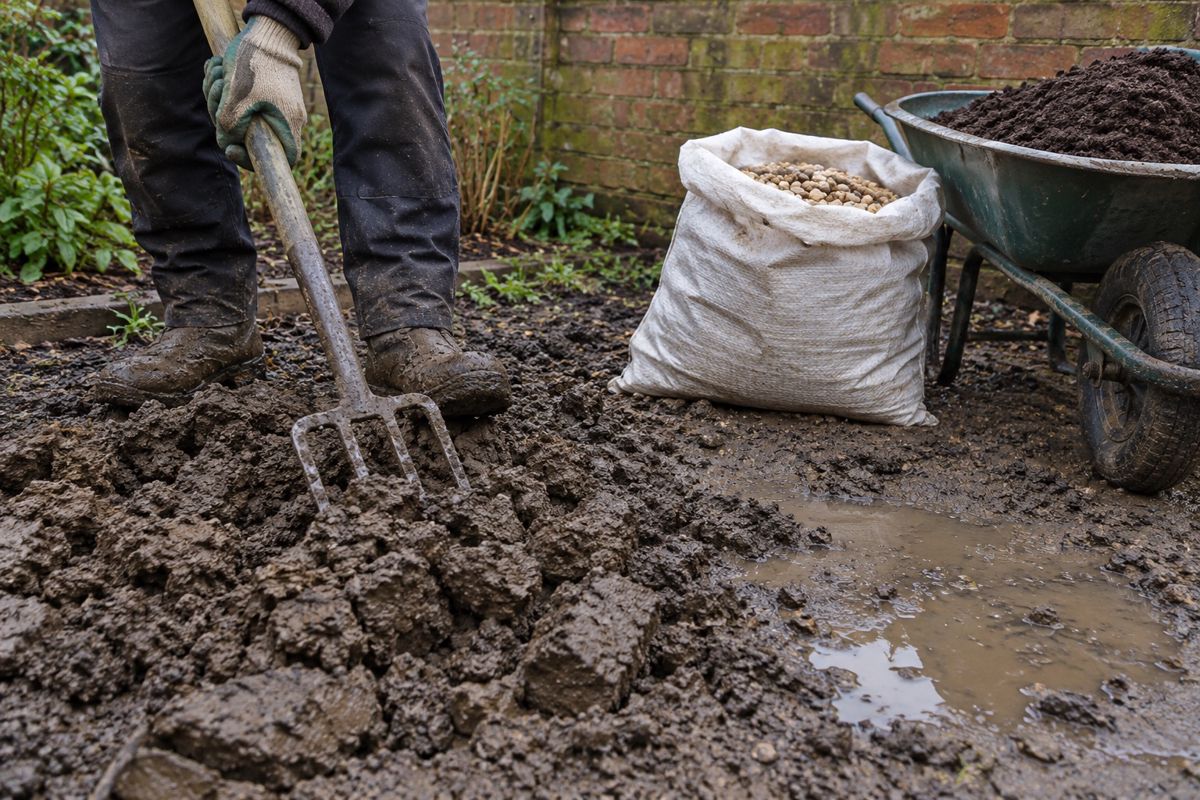
- the soil loosened with a fork or machine before laying, so roots can go down
- a layer of good topsoil, sometimes with grit or sharp sand mixed in
- a slight fall across the lawn, so water runs off rather than collecting
- drainage in the worst spots, such as a land drain or a lawn edge that carries water away
If water stands on your lawn for days after rain, no grass blend will fix it on its own. The ground needs attention first.
Should you choose turf or seed for a small London garden?
Both can work, and each has trade-offs.
Turf
Turf is ready-grown grass in rolls. You get a green, usable lawn within days, and weeds have less chance to get in. It costs more than seed and needs the ground to be prepared well. In a small garden that gets used all the time, many people find it worthwhile.
Seed
Seed is cheaper and gives you more choice of mix, including shade blends. It takes longer to establish, birds and heavy rain can move it, and you need to keep people off for weeks. It suits larger gardens, or anyone who is happy to wait.
Seed is best sown in early autumn or spring. Turf can be laid across more of the year, which is useful when a build has just finished.
How do you prepare the ground before laying turf?
Preparation decides whether the lawn lasts. The steps are simple, though they take time.
- Clear the old lawn, weeds, stones and rubble. Remove the waste rather than burying it.
- Loosen the soil to a spade's depth, especially if it is compacted clay.
- Add good topsoil where the soil is thin, and work in grit if the ground is heavy.
- Level the surface and check the falls. Water should not run towards the house.
- Firm the soil by treading it, then rake it to a fine finish.
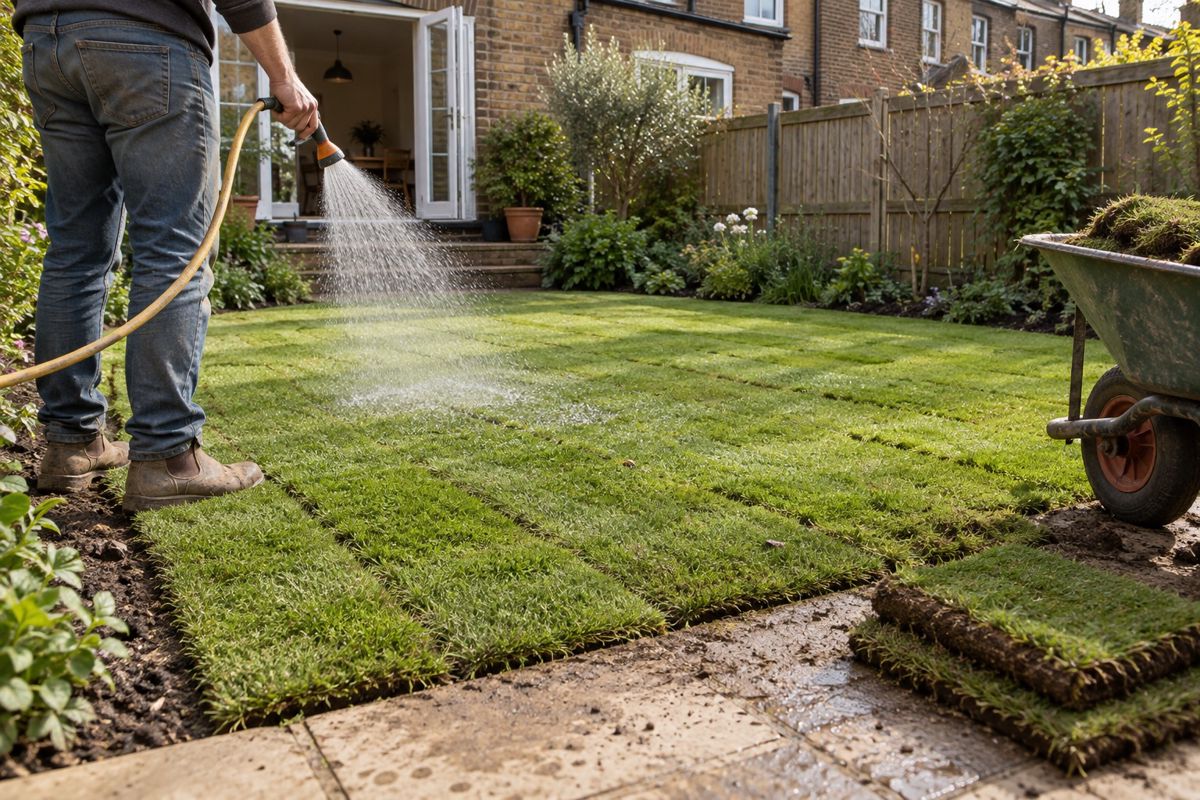
- Lay the turf in a staggered pattern like brickwork, with tight joints and no gaps.
In a terraced house with no side access, all this has to be carried through the property. That is slow, so it is worth planning the order of work and protecting the floors.
When is the right time to lay turf in London?
Autumn and spring are the easiest times. The ground is damp, temperatures are mild and roots grow quickly. You can often lay turf in summer if you can water it every day, and in winter if the ground is neither frozen nor waterlogged.
Hot spells need care. In dry summers, water companies in London can restrict hosepipe use, so check the current rules before laying a lawn at that time of year. A water butt or a watering plan helps. Our guide to a garden watering system explains the options.
What about shade, wear and aftercare?
Shade is the most common problem in London gardens. Walls, fences and neighbouring trees can leave a lawn in shadow for most of the day. Choose a mix with a high share of fine fescue, and accept that deep shade is hard for any grass. In the darkest corners, ground cover plants, a border or paving may be a better answer than grass.
For wear, choose a hard-wearing ryegrass blend, avoid cutting too short and rotate where chairs and play equipment stand. In very small gardens that take constant use, some owners choose artificial grass. It saves mowing but needs a good base, can get hot and does not feed wildlife in the way natural grass does.
After laying, water the turf often enough that the soil beneath stays damp. Keep off it for the first couple of weeks, until it has rooted. Make the first cut light and the mower setting high.
What should you do next?
Look at your lawn after a wet spell. If it is waterlogged, mossy or patchy over most of its area, it is probably time to replace it rather than patch it. Check the soil, the shade and how you use the space, then choose a blend to match.
If you would like help, read about our turf installation service. It covers clearing the old lawn, preparing clay ground and laying new turf, and you can ask for a written quote based on your own garden.