
Skip to content
  • Free written quotes
  • Local crews
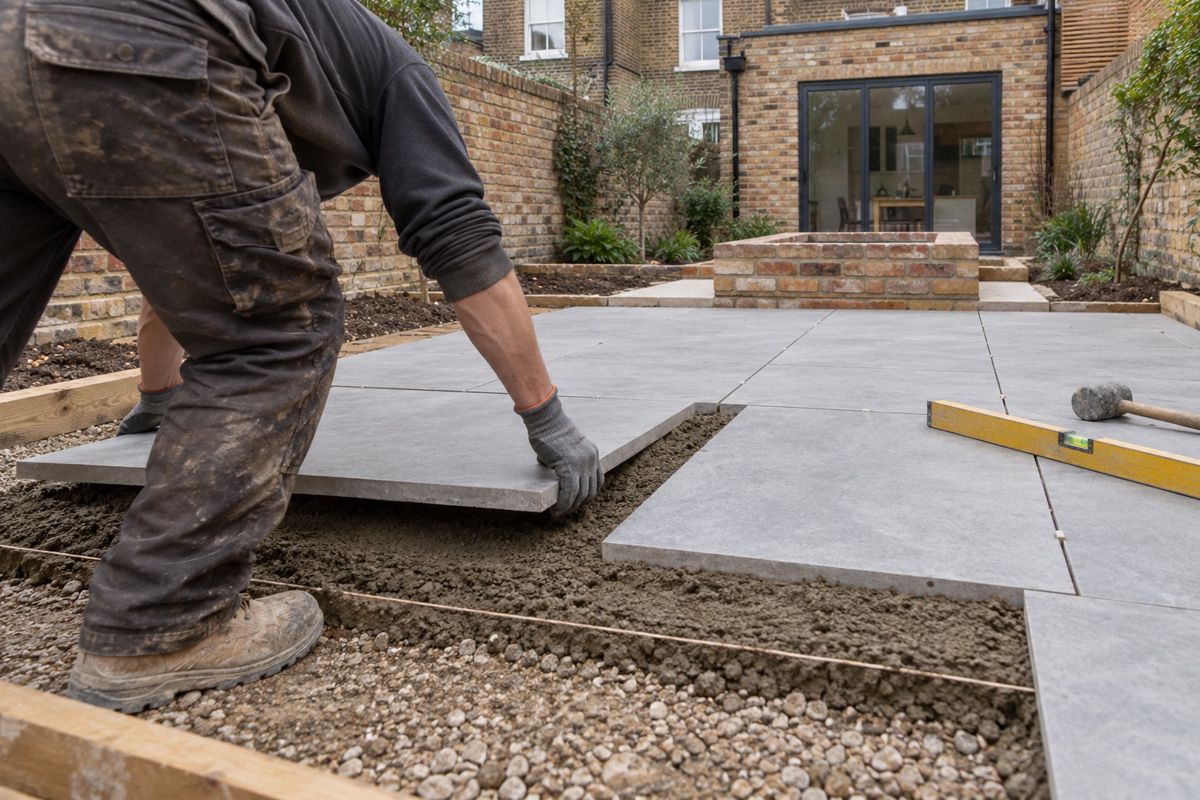
Porcelain patio slabs being laid on a mortar bed in a London garden

Paving and patios in London, England

Hardscape contractor in London for patios, paths and fire pits

Porcelain, sandstone and clay paving laid on a proper base, with falls that move water away from the house.

  • Patios, paths, steps and fire pit areas
  • Base and drainage planned before the slabs go down
  • Written quote before any work starts

Step 1 of 3

What do you need?

What does a hardscape contractor do in a London garden?

Hardscaping is the solid part of a garden: patios, paths, steps, edging, low walls and fire pit areas. A hardscape contractor builds these so they stay level and drain properly, rather than sinking or holding puddles after a few winters.

In London the job is often a patio at the back of a terrace, a path along a side return, or new steps where the garden drops from the house. Some homes also want a paved seating spot with a fire pit, built far enough from fences and neighbouring windows to be safe.

The work is more than laying slabs. It involves marking out, digging to depth, building a compacted base, setting the paving to a fall and finishing the joints. Each step affects how long the surface lasts.

Which paving suits a London garden?

The right material depends on how you use the space, how much sun it gets and what suits the house.

  • Porcelain. Hard, low maintenance and resistant to stains and moss. Good for modern gardens and small terraces.
  • Sandstone. A natural stone with a soft, varied look. It suits period homes, though it can stain and may need sealing.
  • Clay pavers. Brick-sized units with a traditional look that fit well with London stock brick.
  • Block paving and setts. Often used for drives and wide areas, and good where a tight pattern is wanted.
  • Gravel. Quick and permeable, though it needs a good edge and a membrane.

Colour matters in a shaded garden. Very dark slabs can show every leaf and algae mark, while mid tones hide wear better.

What changes the price of paving work?

We give a written quote after seeing the site, not a price from a website. These factors usually decide the figure.

  • the area to be paved and how many cuts and curves there are
  • the material you choose, as porcelain, natural stone and clay vary widely
  • what is underneath, such as old concrete, rubble or tree roots to clear
  • how deep the base needs to be for the ground and the use
  • access, since carrying slabs and sand through a terraced house takes time
  • drainage, including falls, channels or permeable surfacing
  • steps, edges and any retaining walls that go with the patio

Front gardens have extra rules. In England, paving a large front garden with a surface that does not drain naturally usually needs planning permission, so permeable options are often chosen. Check with your council first.

A small patio can take a few days once the ground is cleared. A larger area, with steps or walls, takes longer. Weather matters, because mortar and wet clay do not mix well.

On the day the crew marks out levels, digs out the old surface and brings in base material. The base is compacted in layers. Paving is then set to a gentle fall, normally away from the house, and joints are filled once it has set. Paving should also sit below the damp proof course of the house, which is something we check before starting.

You can expect noise from cutting and compacting, plus dust. Neighbours appreciate a heads up. At the end of the day, loose material is swept and tools are stored safely.

When should you call about paving?

Call when your patio is sinking, holding water, covered in green slime or too small to use. Call when you are planning a fire pit, because its position should be agreed early. Call if a new extension has left the ground at a different level from your old paving.

You can pair paving with a new lawn from our turf installation service, or plan the whole garden with landscape design. Our home page shows the other services we cover across London.

What you can expect

1

Free written quotes

2

Local crews

3

Reliable scheduling

4

Tidy job sites

Questions about landscaping in London

Is porcelain or sandstone better for a small London patio?

Both work. Porcelain is easier to keep clean and does not stain readily, which helps in a shaded, damp garden. Sandstone looks more natural and suits older homes, but it can mark and may need sealing. Think about upkeep and style as well as the cost of the slabs themselves.

Do I need planning permission for a patio?

Rear garden patios generally do not, unless raised high or in a protected setting. Front gardens are different: a large paved area that does not drain naturally normally needs permission. Listed buildings and some conservation areas add further limits. Check with your council before committing.

How do you stop a patio holding water?

By laying it to a slight fall, away from the house, on a compacted base that drains. On clay, water cannot always soak away, so channels, a lawn border to take run-off or permeable paving may be used. Getting levels right at the start matters more than any later repair.

Can a fire pit go in a small garden?

Sometimes. It needs distance from fences, sheds, overhanging branches and neighbouring windows, and a solid, non-flammable surface under it. Smoke can annoy neighbours in close terraces, so a gas or well-designed unit may suit better. We discuss position and safety before it is built.

Can you lay paving over my old patio?

Sometimes, but it is rarely the best result. If the old surface has sunk, cracked or holds water, new paving on top will do the same. Lifting it and rebuilding the base is usually the sounder choice. We can look at the old patio and tell you what is practical.

How it works

  1. Step 1

    Tell us about the yard

    Size, goals and any photos.

  2. Step 2

    Site visit and quote

    We walk the property and put the price in writing.

  3. Step 3

    We do the work

    Scheduled crew, cleanup included.

Request hardscaping

Tell us what you need and we call you back.

No obligation.

Step 1 of 3

What do you need?

Ready when you are Call now or request a quote online. Call for a free quote Get my free landscaping quote 020 7946 0800