
Skip to content
  • Free written quotes
  • Local crews
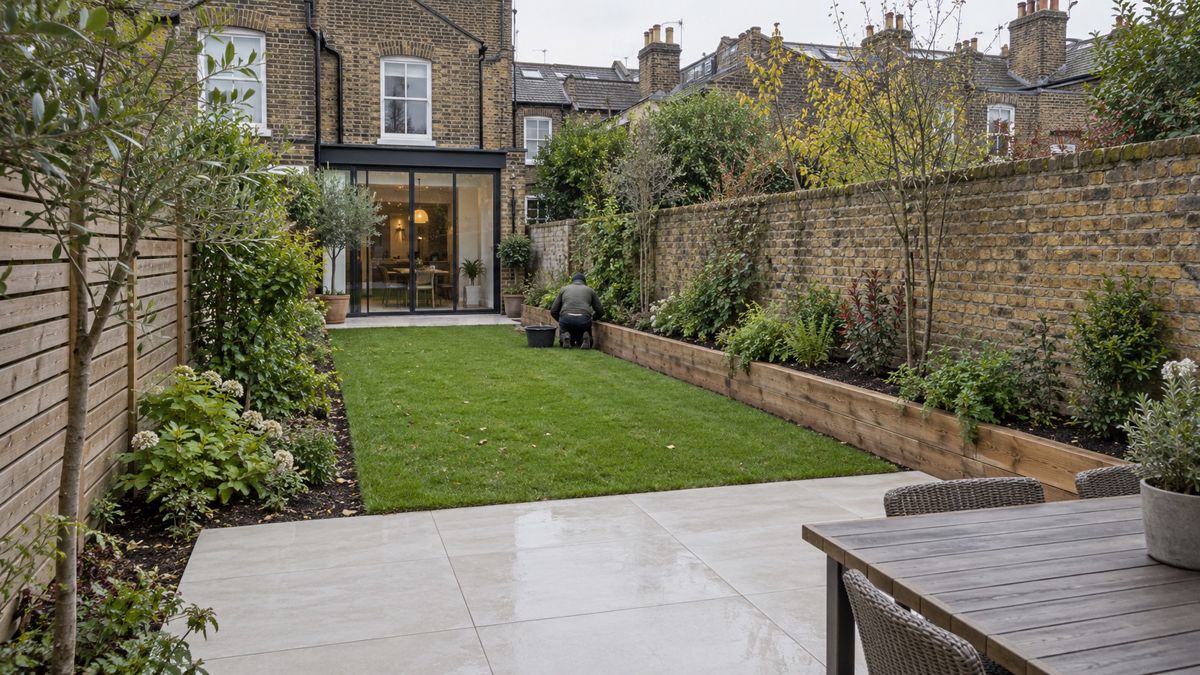
Newly landscaped narrow London terrace garden with patio, lawn and raised beds

Sloping gardens near the park and heath

Landscaping in Greenwich, London for sloping gardens

Design, retaining walls, drainage, paving and turf for hillside homes around Greenwich Park and Blackheath. Request a quote and we will confirm availability.

  • Plans that suit narrow, shaded and overlooked gardens
  • Written quote before any work starts
  • Advice on clay soil, drainage and access

Step 1 of 3

What do you need?

Slopes and period houses define Greenwich gardens

Greenwich rises from the Thames up to the edge of Blackheath, and many gardens slope with it. Georgian and Victorian houses, Victorian villas and later infill sit side by side, so plots vary from steep and narrow to wide and gently graded. Almost all need a thoughtful approach to levels.

Owners usually want a garden they can use, not just look at. That might mean terraces cut into the slope, steps that are safe in wet weather, and a lawn that is not a slippery bank. Planning for the slope first makes everything else easier and cheaper to build.

Soils, drainage and what the hill does to water

Higher ground near Blackheath tends to be lighter and better drained, while lower streets nearer the river have heavier soil and can hold more water. Water also runs downhill. A garden at the foot of a slope may receive run-off from neighbours, and paving at the top can send water towards the house below it.

Roads such as the A2 and routes towards the Blackwall Tunnel approaches can slow deliveries, and many streets near the park have limited parking. Mature trees are common, and some areas are within a World Heritage Site setting or a conservation area, which adds planning questions. Good drainage and solid foundations should be settled before any paving or planting.

What we can do for Greenwich gardens

All five of our services can help with a hillside plot.

Retaining walls are the heart of many Greenwich projects, so we often begin the conversation there. On a hillside, every one of these services depends on getting levels and drainage right first.

Sloping ground changes almost everything about a job, from the machinery that fits to the foundations needed.

  • Wall height and length. Taller walls need stronger foundations and drainage behind them.
  • Soil and water. Heavy or wet ground puts more pressure on a wall.
  • Access. Steps and narrow side passages often rule out machines.
  • Safety. Steps, edges and handrails must suit everyday use, including for children and older relatives.

We explain which of these shape your plot before agreeing any scope. Taking accurate levels on the first visit lets us give a quote that reflects the real shape of the ground.

Structural advice, neighbours and local rules

Tall retaining walls and large changes to ground levels may need engineering input and, in some cases, planning permission or building regulations approval. Walls beside a boundary can also come under the Party Wall etc. Act 1996, so tell your neighbours in good time.

Greenwich includes conservation areas and protected trees, and rules there can affect walls, fences and planting. Trees under a Tree Preservation Order normally need council consent or notice. We flag likely questions in the quote, and for tall structures we may recommend a structural engineer, so the wall is designed and not guessed.

Requesting a quote in Greenwich

Send the form or call 020 7946 0800. We serve Greenwich from outside the area, so availability is confirmed after you ask.

  1. Tell us how steep the garden is and which way it faces.
  2. Describe the problem, such as erosion, a wet bank or an unusable lawn.
  3. Mention access, steps and parking.
  4. Include photos from the top and the bottom of the slope.
  5. We visit, take levels and send a written quote for the work.

On steep ground, the order of work matters, so the quote also explains which parts must come first and why.

Get a quote in Greenwich

Tell us what you need and we call you back.

No obligation.

Step 1 of 3

What do you need?

Questions about Greenwich

Do I need an engineer for a retaining wall in a Greenwich garden?

For low walls, usually not. For taller walls, or those holding back a heavy slope or supporting a structure, an engineer's design is wise and sometimes required. We will tell you where we think advice is needed, and the quote can show it as a separate item so there are no surprises.

How can I stop soil washing down my slope?

Plants with strong root systems, terracing, mulch and proper drainage all reduce erosion. Bare soil on a gradient is especially at risk after heavy rain. For steeper banks, walls or erosion mats may be needed. We examine the slope, soil and water flow, then recommend a combination that suits it.

Is turf practical on a sloping lawn?

On gentle slopes, yes, with good preparation and pegging until roots take. On steeper ground, mowing and slipping become problems, and planting or terracing can work better. We look at the angle and how you plan to use the space, then suggest turf, planting or a mix. Safety on wet grass is part of that choice.

Will water from my neighbour's higher garden affect mine?

It might, particularly after heavy rain. Run-off should not be made worse by changes you make, and land drains or a swale can intercept it. Talk to neighbours early, since drainage often benefits everyone. We can design a scheme that deals with water on your side of the boundary, and we explain what it does for neighbours.

Can you work in a conservation area near the park?

Yes, with a few extra checks. Trees, boundary walls and front gardens can have special rules, and listed buildings may have limits on attached structures. We describe the planned work clearly so you can confirm with the council. Mention any known status of your property when you ask for a quote.