
Skip to content
  • Free written quotes
  • Local crews
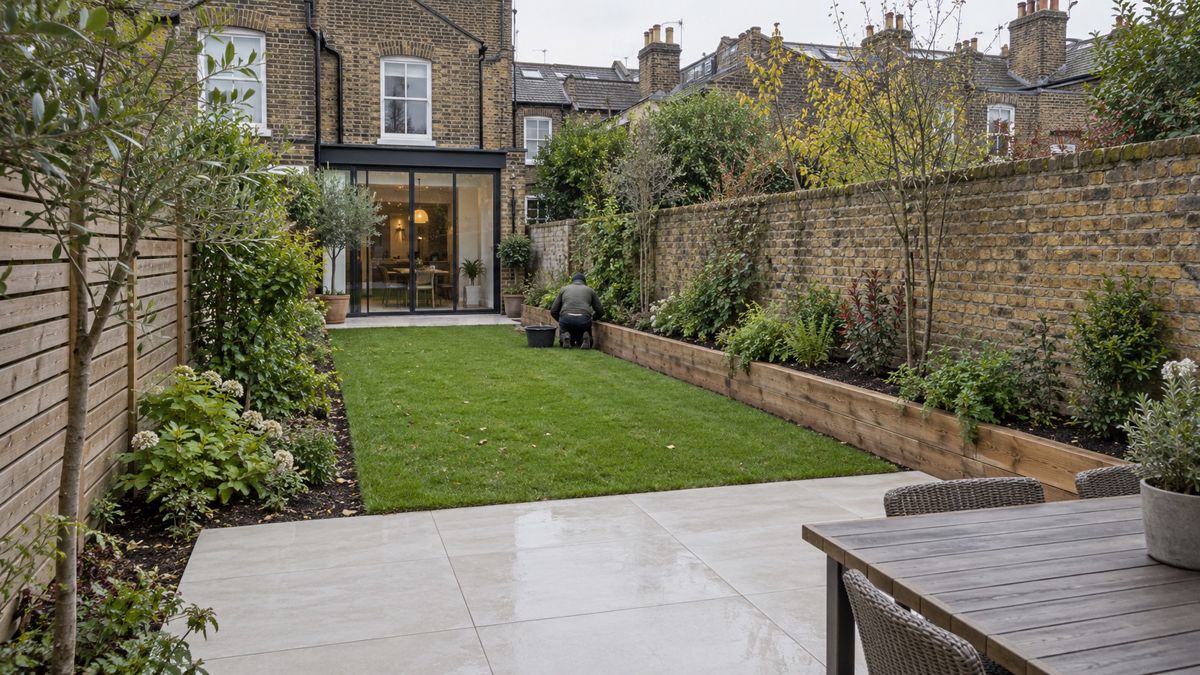
Newly landscaped narrow London terrace garden with patio, lawn and raised beds

Larger gardens near the park and river

Landscaping in Richmond, London for larger family gardens

Design, lawns, paving, walls and irrigation for the roomy gardens around Richmond Park and the Thames. Request a quote and we will confirm availability.

  • Plans that suit narrow, shaded and overlooked gardens
  • Written quote before any work starts
  • Advice on clay soil, drainage and access

Step 1 of 3

What do you need?

Larger plots, longer projects in Richmond

Richmond has a reputation for leafy streets and bigger gardens than most of inner London. Edwardian semis, detached houses and riverside homes often come with lawns, mature borders and space for outdoor dining or play. That gives more freedom than a tiny courtyard, but it also means more to design, build and look after.

Typical projects are staged. An owner might start with the terrace, return to rebuild a lawn the following spring and finish with a new border or irrigation. We plan the whole garden first, so each stage fits the final picture rather than being fixed one at a time.

The river, the park and what lies beneath

Richmond lies on the Thames, with Richmond Park to the south and the green spaces of Kew, Petersham and Twickenham close by. Some low-lying plots near the river sit in flood zones, so surface water and ground water behave differently there. Drainage and plant choices should reflect that.

Soils vary. Parts of the area have gravel and lighter ground near the river, while other streets sit on London clay. Gardens that back onto parkland or the towpath may have wildlife, such as deer or foxes, that affect fencing and planting. Roads such as the A316 and the Richmond Hill climb also influence deliveries and parking.

Garden services for Richmond households

Richmond homeowners can ask us about all five of our landscaping services.

With bigger lawns, the right watering plan can matter as much as the turf itself. Large gardens often combine several of these at once, so we usually draw up one plan covering the whole plot.

A larger garden can be simpler to access but harder to price, because the scope has more variables. Here are the points that tend to matter most.

  • Area. More ground means more preparation, materials and labour.
  • Machine access. Side gates and driveways may allow small diggers, saving time.
  • Flood risk and drainage. Plots near the river often need careful levels and outlets.
  • Existing features. Mature trees, walls and old paving influence what can change.

We set out the scope in writing, and mark clearly anything that depends on what we find when we start digging.

Conservation areas, trees and permissions

Richmond has many conservation areas and a large number of mature and protected trees. Trees with a Tree Preservation Order, or any tree in a conservation area, usually need council consent or notice before pruning or removal. Digging close to roots can also damage a tree, so planning matters.

Large paved front gardens and new driveways may need planning permission if the surface does not drain naturally. Plots near the river can have further rules. We recommend checking with the council about any change at the front or near a protected tree, and we are happy to describe the work in writing so you can ask the right questions.

Asking for a quote for a Richmond garden

Use the form or call 020 7946 0800. We serve Richmond from outside the area, so availability is confirmed after your request.

  1. Describe the garden and what you would like to change first.
  2. Tell us about side access, gates and where a skip could stand.
  3. Mention trees, boundaries, flood history and any restrictions you know about.
  4. Send photos of the whole plot.
  5. We visit, assess the ground and send a written, itemised quote.

Bigger gardens suit a phased plan, so tell us if you would rather spread the cost over more than one season.

Get a quote in Richmond

Tell us what you need and we call you back.

No obligation.

Step 1 of 3

What do you need?

Questions about Richmond

Can you plan a garden project in stages over several years?

Yes, and for larger Richmond gardens it is often the sensible way. We prepare an overall plan first, then price each stage separately. That way the terrace, lawn and planting all fit together, and the order of work avoids damage to finished areas. You can pause between stages without losing the design.

My garden backs onto the river. Does that change the work?

It can. Low-lying plots may flood or hold water, so levels, drainage and plant choices need extra care. Some rules also apply near watercourses. We look at how water behaves on the site and design accordingly. You should check flood information for your address and tell us about any history of water on the land.

Will deer or foxes damage new planting near the park?

They can, depending on the location. Deer browse many plants, and foxes dig in fresh soil. Fencing, plant selection and protection for young specimens all help. We suggest tougher plants near open boundaries, and we discuss protection at the design stage rather than after a loss. A low fence around young planting, or a mix of plants animals tend to leave alone, can help a great deal.

How should a large Richmond lawn be renewed?

Start with the soil. Remove weeds and moss, level, loosen compaction and add topsoil if needed before laying turf or sowing seed. Turf gives a quicker result, while seed costs less and takes longer. Autumn and spring are usually the easiest times. We explain the options for your lawn and ground.

Do I need permission to build a retaining wall or terrace?

Low walls often do not, but taller walls, structures near boundaries and work in conservation areas may need permission. The Party Wall etc. Act 1996 can apply near a neighbour's land. We recommend confirming with the council, and we describe the height and position of any wall clearly in the quote.